
New construction projects give homeowners, builders, and designers the opportunity to plan every surface with intention. In kitchens, bathrooms, laundry rooms, wet bars, and outdoor living areas, countertops influence more than the visual finish. They affect workflow, durability, maintenance, installation timing, and the long-term value of the property.
Choosing custom countertops Framingham MA during the construction phase allows the countertop plan to be coordinated with cabinetry, plumbing, appliances, lighting, flooring, and the overall architectural design. This is especially relevant when the project includes large islands, full-height backsplashes, waterfall panels, undermount sinks, or multiple countertop areas across the home.
Many construction delays happen when countertop decisions are treated as a late-stage finish instead of a coordinated project component. If material selection, templating, fabrication, and installation are not aligned with the builder’s schedule, even a well-designed home can face avoidable adjustments near completion.
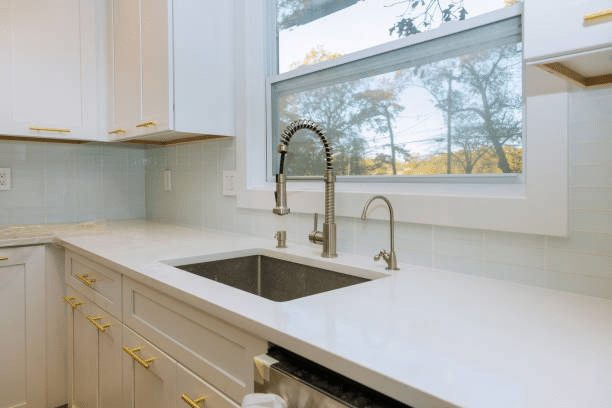
This guide explains how custom countertops work in new construction projects, what homeowners should evaluate before selecting a material, how fabrication fits into the building process, and why working with an experienced local countertop company can help reduce risk while improving the final result.
What Are Custom Countertops Framingham MA?
Custom countertops Framingham MA are countertop surfaces measured, fabricated, and installed specifically for a property’s exact layout, instead of relying on prefabricated dimensions. They are planned according to cabinet measurements, appliance specifications, sink models, edge profiles, slab patterns, backsplash details, and the functional needs of each room.
For new construction, custom countertops help align design intent with practical performance. The process allows homeowners and builders to select the right stone or engineered material, define accurate measurements after cabinets are installed, and fabricate surfaces that fit the home with precision.
Why Custom Countertops Matter in New Construction Projects
Countertops are often installed near the final stages of construction, but the decisions that affect them begin much earlier. Cabinet layout, appliance selection, plumbing location, sink type, wall conditions, and island dimensions all influence the final countertop design.
A new home allows these elements to be coordinated before installation begins. That makes it easier to avoid improvised solutions, mismatched finishes, visible seam issues, and delays caused by missing product specifications.
They Support Better Design Integration
Custom countertops can be planned around the full design concept of the home. This is different from choosing a standard slab or builder-grade surface after most decisions have already been made.
Homeowners can coordinate countertop materials with:
- Cabinet color and door style;
- Kitchen island proportions;
- Flooring tones;
- Backsplash design;
- Lighting temperature;
- Appliance finishes;
- Bathroom vanity layouts;
- Fireplace surrounds and specialty stone areas.
Magic Touch Countertops works with residential and commercial projects and offers services that include countertop fabrication, countertop installation, quartz, granite, marble, and countertop repairs. Using service pages as internal references is appropriate here because the blog section is not currently available.
They Help Reduce Late-Stage Construction Problems
Countertop installation depends on several previous steps being completed correctly. Cabinets must be fully installed and level. Sink and appliance models must be confirmed. Support for overhangs, waterfall panels, or heavy stone sections must be addressed before the slabs arrive.
When these details are reviewed early, the project is less likely to face field modifications that increase cost or delay occupancy.
They Improve Long-Term Functionality
A countertop is not only a decorative surface. It is a daily-use work area. In a kitchen, it must support cooking, cleaning, serving, storage, family routines, and entertaining. In bathrooms and laundry rooms, it must resist moisture, cleaning products, and repeated contact with personal care or household items.
This is why material selection should be based on use case, not appearance alone. The best countertop for a high-traffic family kitchen may not be the same choice for a powder room, fireplace surround, or outdoor kitchen.
Best Countertop Materials for New Construction Homes
The right material depends on the room, budget, design style, maintenance expectations, and performance requirements. Homeowners looking for custom countertops Framingham MA often compare quartz, granite, marble, quartzite, and other stone surfaces before making a final decision.
Quartz Countertops
Quartz is a common choice for new construction kitchens and bathrooms because it offers design consistency, strong durability, and low maintenance. Since engineered quartz is non-porous, it does not require sealing and is generally resistant to everyday stains.
Quartz works well for:
- Kitchen countertops;
- Large islands;
- Bathroom vanities;
- Laundry rooms;
- Home offices;
- Entertainment spaces.
Homeowners who want consistent veining, neutral tones, or a modern stone appearance often choose quartz because it provides predictable design results across multiple rooms.
Granite Countertops
Granite remains a strong option for homeowners who prefer natural stone. Each slab has unique mineral patterns, color variation, and movement. This makes granite suitable for projects where the homeowner wants a surface that cannot be exactly duplicated.
Granite is commonly selected for kitchens, islands, bathroom vanities, bar tops, and other areas where durability and natural character are priorities. It generally performs well with heat and daily use, although sealing may be recommended depending on the stone and finish.
Marble Countertops
Marble is often chosen for refined bathrooms, fireplace surrounds, luxury vanities, and design-forward spaces. Its veining and natural softness create a distinctive appearance, but marble requires more care than many other materials.
Because marble can be more vulnerable to etching, staining, and surface wear, it should be selected with a clear understanding of maintenance requirements. For the right room and user profile, it can deliver a high-end result with strong visual appeal.
Quartzite Countertops
Quartzite is a natural stone valued for its hardness, durability, and dramatic veining. It is often selected by homeowners who want the look of natural marble with stronger resistance to wear.
Quartzite usually requires sealing, but when properly maintained, it can perform well in kitchens and other high-use spaces. It is especially effective in new construction homes where the countertop is intended to serve as a visual centerpiece.
How Countertop Planning Fits Into the Construction Timeline
New construction projects depend on sequencing. Countertops cannot be accurately measured until the cabinets are installed, but the planning process should begin well before that point.
A practical timeline usually includes:
- Review the kitchen, bathroom, and specialty area layouts during the design phase.
- Select countertop materials before cabinets are finalized whenever possible.
- Confirm sink, faucet, cooktop, range, and appliance specifications.
- Install and level all cabinets before templating.
- Complete digital or physical templates based on final site conditions.
- Approve slab layout, seam placement, edge profile, and cutouts.
- Fabricate the countertops according to approved measurements.
- Schedule installation after the site is ready for stone placement.
This process reduces guesswork and helps the builder coordinate related trades. It also gives the homeowner more control over how the finished surfaces will look and function.
How Custom Countertops Work in Practice During New Construction
One of the greatest advantages of installing custom countertops Framingham MA in a new construction project is the ability to coordinate every step before the home is completed. Rather than adapting the countertop to an existing layout, the fabrication process becomes part of the overall construction schedule.
Although every project has unique requirements, most custom countertop installations follow a similar sequence that prioritizes precision, efficiency, and long-term performance.
1. Design Consultation and Project Review
The process begins with reviewing architectural plans, cabinet layouts, appliance specifications, and the homeowner’s design preferences. During this stage, the countertop specialist evaluates the overall scope of the project while identifying opportunities to improve functionality and aesthetics.
Discussions typically include:
- Preferred countertop materials;
- Edge profile selection;
- Backsplash options;
- Kitchen island dimensions;
- Sink configuration;
- Overhang requirements;
- Specialty applications such as bars, laundry rooms, or outdoor kitchens.
2. Material Selection
Once the overall design has been defined, homeowners select the slab that best fits both the style of the home and the intended use of each space.
Whenever possible, viewing full slabs instead of small samples provides a better understanding of natural veining, color variation, movement, and overall appearance after installation.
3. Cabinet Installation
Countertop measurements should only be performed after cabinets have been permanently installed, leveled, and secured. Even small adjustments to cabinetry after templating can affect fabrication accuracy.
4. Digital Templating
Modern fabrication shops use digital laser measuring systems to capture highly accurate dimensions.
Digital templating records:
- Wall dimensions;
- Corner angles;
- Sink locations;
- Cooktop openings;
- Faucet positions;
- Island measurements;
- Overhang specifications.
This technology helps reduce fabrication errors while improving the overall fit during installation.
5. Slab Layout Approval
Before cutting begins, fabricators determine the optimal slab layout to maintain consistent veining, minimize visible seams, and maximize material utilization.
This stage is particularly important for natural stones such as granite, marble, and quartzite because every slab has unique characteristics.
6. Precision Fabrication
After approval, specialized equipment is used to fabricate each countertop according to the approved template.
Fabrication typically includes:
- Computer-controlled cutting;
- Edge profiling;
- Sink polishing;
- Surface finishing;
- Quality inspection;
- Final preparation for transportation.
7. Professional Installation
Installation usually occurs after flooring, painting, and cabinetry have been completed. Each countertop section is carefully positioned, leveled, secured, and inspected before plumbing fixtures are connected.
A professional installation helps maximize both appearance and long-term durability.
Technical and Operational Considerations
Countertop fabrication involves much more than selecting a beautiful slab. Proper coordination between multiple construction trades is necessary to achieve an accurate installation.
1.Cabinet Installation Quality
Countertops are only as accurate as the cabinetry beneath them. Before templating begins, installers verify that cabinets are level, securely fastened, and properly aligned.
2.Appliance Specifications
Sink models, cooktops, slide-in ranges, beverage centers, and specialty appliances should be finalized before fabrication starts. Changing appliance dimensions later may require expensive modifications.
3.Support Requirements
Large islands, breakfast bars, floating countertops, and waterfall edges often require additional structural support. Builders should coordinate these requirements before installation day.
4.Environmental Conditions
Different rooms expose countertops to different environmental conditions. Moisture, direct sunlight, temperature variation, and cleaning products should all be considered when selecting the appropriate material.
The Quartz Countertops service page explains why engineered quartz is frequently selected for kitchens and bathrooms requiring low-maintenance performance, while the Granite Countertops page highlights the characteristics of natural stone for homeowners who prefer unique slab patterns.
Industry organizations such as the Natural Stone Institute publish technical guidance covering fabrication methods, installation practices, substrate preparation, and maintenance recommendations that help establish quality standards across the stone industry.
New Construction Countertop Planning Overview
| Construction Phase | Countertop Activity | Main Objective |
| Project Design | Material selection | Match design goals and budget |
| Cabinet Planning | Confirm layout compatibility | Coordinate cabinetry and appliances |
| Cabinet Installation | Prepare for templating | Verify final dimensions |
| Digital Templating | Laser measurements | Capture exact project specifications |
| Fabrication | Cutting and finishing | Produce custom countertop components |
| Installation | Stone placement | Complete the countertop system |
| Final Construction | Plumbing connections and inspection | Prepare the home for occupancy |
Design Decisions That Influence Long-Term Performance
Small design decisions made during planning often have a significant impact on both appearance and usability after the home is completed.
1.Edge Profiles
Straight, eased, beveled, bullnose, and mitered edges all create different visual effects. Selecting an edge profile that complements the home’s architectural style helps create a more cohesive design.
2.Surface Finish
Polished, honed, and leathered finishes each provide different maintenance characteristics and visual appeal. The choice depends on homeowner preference and the intended use of the space.
3.Seam Placement
Larger kitchens sometimes require seams due to slab size limitations. Proper planning allows fabricators to position seams where they are both structurally appropriate and visually discreet.
Homeowners interested in combining different natural stone applications throughout the home can also review the Marble Countertops service to compare the characteristics of marble with quartz and granite before making a final decision.
Common Mistakes When Choosing Custom Countertops for New Construction
Even well-planned construction projects can experience unnecessary delays or additional costs when countertop decisions are made without considering the overall building process. Understanding the most common mistakes helps homeowners make informed decisions from the beginning.
1.Choosing Material Based Only on Appearance
A countertop should complement the home’s design, but aesthetics should not be the only deciding factor. Daily use, maintenance expectations, heat resistance, moisture exposure, and long-term durability should also influence material selection.
2.Scheduling Measurements Too Early
Measuring countertops before cabinets are permanently installed often results in inaccurate templates. Even minor cabinet adjustments can affect the final dimensions.
3.Changing Appliances After Fabrication Begins
Switching to a different sink, cooktop, or appliance model after fabrication starts may require additional cutting or, in some situations, complete re-fabrication of the countertop.
4.Ignoring Structural Support Requirements
Oversized islands, breakfast bars, waterfall edges, and extended overhangs frequently require additional support. Planning for these structural needs during construction helps prevent future problems.
5.Focusing Only on Initial Cost
The lowest purchase price does not always represent the best long-term value. Maintenance requirements, expected lifespan, repair potential, and overall performance should all be evaluated before making a final decision.
Benefits of Investing in Custom Countertops
Custom fabrication provides advantages that extend well beyond appearance. Because every countertop is produced specifically for the project, homeowners gain greater flexibility, improved functionality, and a finished product designed to fit the home precisely.
- Accurate fit for kitchens, bathrooms, laundry rooms, bars, and specialty spaces.
- Greater flexibility when designing large islands and waterfall edges.
- Professional integration with cabinetry and appliances.
- Improved property value through premium finishes.
- Long-lasting performance when appropriate materials are selected.
- Efficient coordination with the overall construction schedule.
Homeowners who require fabrication, installation, repairs, or complete countertop replacement can explore all available services through the Magic Touch Countertops website to better understand the solutions available for residential and commercial projects.
For additional technical guidance regarding engineered stone performance, fabrication recommendations, and product specifications, manufacturers associated with the Engineered Stone Forum provide educational resources that complement industry best practices.
Homeowners comparing natural stone materials can also consult the Natural Stone Institute Consumer Resources, which offers information about material characteristics, maintenance, and stone selection.
Frequently Asked Questions About Custom Countertops Framingham MA
1.When should countertops be selected during a new construction project?
Material selection is ideally completed during the design phase so the builder can coordinate cabinetry, appliance specifications, and construction scheduling. Final measurements should only occur after cabinets have been installed.
2.Which countertop material is best for a family kitchen?
The ideal material depends on lifestyle, maintenance preferences, and design goals. Quartz is often selected for its low maintenance, while granite and quartzite remain popular choices for homeowners who prefer natural stone.
3.Can custom countertops be installed outside the kitchen?
Yes. Custom countertops are frequently fabricated for bathrooms, laundry rooms, mudrooms, wet bars, fireplaces, offices, and outdoor kitchens when the selected material is appropriate for the environment.
4.How long does fabrication usually take?
Production time depends on material availability, project complexity, fabrication workload, and scheduling. After templating has been completed, fabrication generally requires several days before installation can be scheduled.
5.Do large kitchen islands always require seams?
Not necessarily. Seam placement depends on the dimensions of the island and the available slab size. Experienced fabricators position seams to balance structural performance with visual appearance whenever they are required.
6.Are custom countertops worth the investment?
For many homeowners, custom fabrication provides better fit, improved aesthetics, greater design flexibility, higher durability, and stronger long-term property value than standard prefabricated options.
Build Your New Home With Countertops Designed for Long-Term Performance
Selecting custom countertops Framingham MA is about more than choosing a beautiful slab. It requires thoughtful planning, accurate measurements, professional fabrication, and installation that aligns with the overall construction schedule. When every stage is coordinated correctly, the result is a countertop system that complements the home’s architecture, supports daily living, and delivers lasting performance.
From selecting quartz, granite, marble, or quartzite to planning slab layouts, edge profiles, and installation details, every decision contributes to the finished appearance of the home. Working with experienced professionals early in the project helps reduce delays, minimize costly changes, and ensure every countertop is fabricated specifically for its intended space.
Professional Countertop Solutions for Your New Construction Project
Whether you’re building a custom home, working with a residential builder, or managing a large-scale construction project, Magic Touch Countertops provides professional fabrication and installation services designed to deliver precision, durability, and exceptional craftsmanship.
From quartz, granite, marble, and quartzite countertops to expert fabrication, installation, repairs, and replacements, the team works closely with homeowners, designers, contractors, and builders to create surfaces tailored to each project’s exact specifications.
Visit the Magic Touch Countertops homepage to explore available services and materials. If you’d like personalized guidance for your project, contact the Magic Touch Countertops team to discuss your plans, request an estimate, and receive expert recommendations for your new construction project.