
Kitchen design trends change quickly, but some features continue to stand out because they combine strong visual impact with everyday functionality. One of the most requested premium upgrades in modern kitchen remodeling is the use of waterfall countertops, especially on kitchen islands and peninsula layouts.
The appeal is easy to understand. Instead of stopping at the cabinet edge, the countertop material continues vertically down the side, creating a clean architectural line that makes the island feel more custom, finished, and integrated into the room.
The main question for homeowners is whether the added cost is justified. A waterfall countertop usually requires more material, more complex fabrication, careful vein matching, and professional installation. When poorly planned, the result can look forced or expose visible seams. When executed correctly, it can become the design anchor of the entire kitchen.
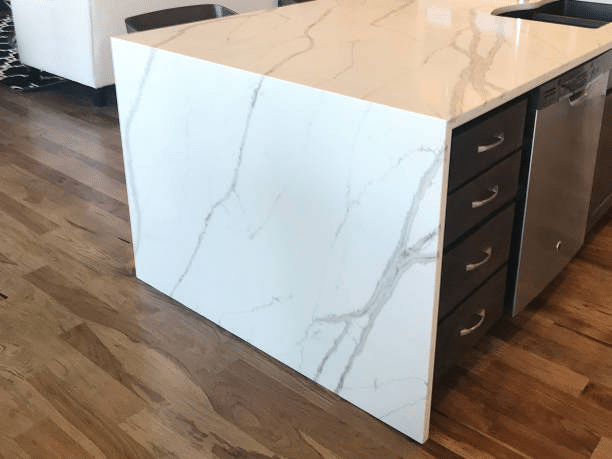
This guide explains how waterfall countertops work, when they make sense, which materials perform best, what technical details affect the final result, and how to decide whether this upgrade is worth the investment for your home.
What Are Waterfall Countertops?
Waterfall countertops are countertops that extend vertically from the horizontal surface down the side of a kitchen island, cabinet, or peninsula, creating a continuous “waterfall” effect. Instead of ending at the edge of the cabinetry, the countertop material flows down to the floor or near the floor, covering the side panel with the same stone or engineered surface.
This design is often used with quartz, granite, marble, quartzite, and porcelain slabs. Its purpose is both aesthetic and practical: it creates a seamless custom look while helping protect exposed cabinet sides from impact, scratches, moisture, and daily wear.
Homeowners comparing design styles can review examples of premium countertop projects in Framingham, MA to see how finished stone surfaces influence the appearance of kitchens, bathrooms, islands, and other custom installations.
Why Waterfall Countertops Have Become So Popular
A waterfall countertop transforms an ordinary island into a focal point. Instead of exposing cabinet panels on the side of the island, the stone itself becomes part of the architecture, creating a more refined and intentional design.
This feature is especially effective in open-concept homes, where the kitchen island is visible from the dining room, living room, or main entry area. Because the side of the island remains exposed from multiple angles, a waterfall edge gives the space a more complete and furniture-like appearance.
The design also responds to a practical need. Cabinet ends are often exposed to foot traffic, stools, pets, cleaning equipment, and moisture. Extending the countertop material vertically adds a durable protective layer in one of the most vulnerable parts of the island.
When the Design Makes the Most Sense
Waterfall countertops are not necessary for every kitchen. They tend to work best when the island is visually prominent, the homeowner wants a cleaner design, or the selected material has a pattern worth showcasing.
- large kitchen islands visible from multiple rooms;
- modern kitchens with clean lines and minimal visual clutter;
- luxury remodels where the countertop is a central design element;
- open-concept layouts where the island functions as a visual divider;
- homes where cabinet sides need extra protection from daily use.
For homeowners who are still comparing colors, finishes, and layout possibilities, a countertop space visualizer can help preview how different stone surfaces may look before final material selection.
What Makes a High-Quality Waterfall Countertop?
Not every waterfall installation delivers the same result. The finished appearance depends heavily on slab selection, fabrication precision, seam planning, edge treatment, and the installer’s ability to align the horizontal and vertical pieces correctly.
1.Continuous Veining
One of the strongest signs of a premium waterfall countertop is continuous veining. This means the stone pattern appears to flow naturally from the horizontal surface down the vertical panel, almost as if the slab were folded over the edge.
This technique is especially important with marble, quartzite, granite, and bold-pattern quartz. Without careful vein matching, the transition between the top and side panel can look disconnected.
Professional fabricators often use bookmatching, vein matching, or planned slab layout to control how the pattern continues across the mitered edge. This step should happen before any cuts are made.
2.Precision Fabrication
Creating a waterfall edge involves more than cutting an additional side piece. The process requires exact measurements, clean miter cuts, edge polishing, adhesive selection, and dry fitting before final installation.
A professional fabrication process typically includes:
- digital templating of the island or cabinet structure;
- slab inspection and layout planning;
- precision cutting of horizontal and vertical panels;
- 45-degree miter preparation;
- edge polishing and finishing;
- seam color matching;
- reinforcement where needed;
- final inspection before installation.
According to the Occupational Safety and Health Administration guidance on crystalline silica, stone fabrication and cutting work require proper exposure controls and safe work practices. For homeowners, this reinforces the importance of hiring trained professionals rather than treating countertop fabrication as a simple decorative task.
3.Nearly Invisible Seams
Most waterfall countertops require at least one seam where the horizontal slab meets the vertical panel. In high-quality installations, that seam should be tight, clean, aligned, and visually subtle.
Installers reduce seam visibility by using accurate cuts, color-matched epoxy, polished mitered edges, and precise panel alignment. Poor seams are one of the most common signs of rushed or inexperienced work.
Best Materials for Waterfall Countertops
Several materials can be used for waterfall countertops, but each option has different strengths, maintenance needs, fabrication requirements, and design effects.
Quartz
Quartz is one of the most popular materials for waterfall countertops because it offers consistent patterns, low maintenance, and strong resistance to everyday stains. Since quartz is engineered, it often provides better predictability during pattern matching than many natural stones.
Quartz is a strong option for homeowners who want:
- low-maintenance kitchen surfaces;
- consistent color and pattern;
- modern design options;
- good stain resistance;
- no sealing requirement.
Granite
Granite creates durable and visually distinctive waterfall installations. Each slab has its own mineral pattern, movement, and color variation, which can make the finished island feel unique.
It performs well in busy kitchens because it offers strong heat resistance, scratch resistance, and long service life when properly sealed and maintained.
Quartzite
Quartzite is often chosen for luxury waterfall countertops because it combines natural stone character with excellent durability. Its bold veining can create a dramatic vertical flow when the slab layout is planned correctly.
It typically requires sealing, but it offers high resistance to heat and scratching compared with softer natural stones.
Marble
Marble is valued for its timeless appearance and elegant veining. It can create some of the most visually impressive waterfall islands, especially in high-end kitchens and decorative applications.
However, marble is more porous and more sensitive to acids than quartz or granite. Homeowners considering marble should understand the maintenance expectations before choosing it for a high-use kitchen. The marble countertop options available through Magic Touch Countertops can help clients compare visual styles before deciding whether this natural stone matches their project.
Porcelain
Porcelain slabs have become increasingly popular for contemporary waterfall countertops. They offer a thin, modern profile, strong heat resistance, UV resistance, and a broad range of stone-look designs.
Porcelain can work well in minimalist kitchens, high-contrast designs, and some applications where sunlight exposure is a concern. Because it requires specialized handling, fabrication experience is especially important.
Design Styles That Benefit Most from Waterfall Countertops
Waterfall countertops are often associated with modern kitchens, but they can support several design styles when the material, edge detail, cabinetry, and lighting are properly coordinated.
1.Contemporary Kitchens
Contemporary kitchens usually emphasize clean lines, flat-panel cabinetry, integrated appliances, and uncluttered surfaces. A waterfall island reinforces that visual language by creating a continuous surface with minimal interruption.
2.Open-Concept Homes
In open layouts, the island is often one of the most visible parts of the home. A waterfall countertop gives the island a finished appearance from multiple viewpoints and helps connect the kitchen with adjacent living spaces.
3.Luxury Residential Designs
Custom homes and higher-end remodels often use waterfall countertops to communicate craftsmanship and attention to detail. When paired with premium lighting, quality cabinetry, and carefully selected flooring, the island becomes a central architectural feature.
4.Transitional Kitchens
Waterfall countertops are not limited to ultra-modern interiors. In transitional kitchens, they can balance classic cabinetry with more current finishes, creating a design that feels polished without being too stark.
How Waterfall Countertops Work in Practice
A waterfall countertop requires significantly more planning than a traditional countertop installation. Every stage—from selecting the slab to the final installation—must be carefully coordinated to ensure both structural integrity and visual continuity.
While each project is unique, experienced fabricators generally follow the same sequence of steps to achieve a seamless result.
1. Selecting the Right Slab
The process starts with choosing the countertop material. Beyond selecting a color, homeowners should evaluate:
- veining direction;
- pattern consistency;
- slab dimensions;
- available thicknesses;
- surface finish;
- overall design compatibility.
Viewing the entire slab is particularly important when selecting granite, marble, or quartzite. Unlike engineered quartz, natural stone varies considerably from slab to slab, making full-slab approval an important part of achieving a successful waterfall design.
2. Digital Templating
Once cabinetry has been permanently installed and leveled, technicians perform digital templating.
This stage records:
- cabinet dimensions;
- island measurements;
- overhang specifications;
- sink location;
- cooktop positioning;
- corner angles;
- the dimensions of the waterfall panel.
Accurate digital measurements minimize fabrication errors and improve the overall installation quality.
3. Planning the Vein Layout
Before cutting begins, fabricators carefully determine how the stone pattern will transition from the horizontal countertop to the vertical panel.
This planning stage is essential because it creates the visual illusion that the slab naturally folds over the edge rather than being assembled from separate pieces.
Professional slab layout planning also reduces unnecessary material waste while preserving the most attractive portions of the stone.
4. Fabrication
After measurements and slab layout are approved, fabrication begins.
This process typically includes:
- precision cutting;
- miter edge preparation;
- sink and faucet cutouts;
- edge polishing;
- dry fitting;
- reinforcement where required;
- quality inspection before delivery.
Precision fabrication significantly influences the final appearance of the seams and the long-term durability of the countertop.
5. Installation
Installation generally occurs after all fabrication has been completed and inspected.
The installer will:
- position the horizontal countertop;
- install the vertical waterfall panel;
- align the miter joint;
- bond the sections together;
- verify levelness;
- inspect seam quality;
- perform final cleaning and inspection.
Depending on project size and complexity, installation may take several hours or an entire day.
Technical Considerations Before Choosing Waterfall Countertops
Although waterfall countertops create an elegant architectural feature, they also introduce additional structural and fabrication considerations that homeowners should understand before approving the project.
Cabinet Strength
Because the vertical stone panel adds considerable weight, cabinetry must provide adequate structural support.
Professional installers verify that cabinets are properly secured, level, and capable of supporting both the horizontal countertop and the waterfall section before fabrication begins.
Slab Size
Large kitchen islands often require oversized slabs to achieve continuous veining without additional seams.
Material availability may influence the overall design, especially for natural stone products where slab dimensions vary between suppliers.
Miter Joint Quality
The connection between the countertop surface and the waterfall panel is usually formed with a 45-degree miter joint.
Properly fabricated miter joints create the appearance of a thicker slab while keeping seams discreet.
Poor alignment or inconsistent polishing can significantly reduce the visual quality of the finished installation.
Material Thickness
Most waterfall countertops are fabricated using either 2 cm or 3 cm slabs.
In some projects, laminated edges are used to create the appearance of greater thickness while controlling weight and material usage.
Support for Overhangs
Kitchen islands frequently include seating areas with countertop overhangs.
Longer spans may require:
- hidden steel brackets;
- structural reinforcement;
- decorative support systems;
- additional cabinet framing.
Appropriate support helps prevent stress fractures and long-term movement.
Lighting and Visual Impact
Lighting affects how waterfall countertops are perceived.
Natural daylight often enhances stone movement and depth, while pendant lighting can emphasize veining, edge profiles, and polished finishes.
Coordinating countertop selection with the overall lighting plan typically produces a more balanced and visually cohesive kitchen.
Homeowners planning a complete renovation may also benefit from visiting the Magic Touch Countertops showroom, where different materials, finishes, and edge profiles can be compared in person before fabrication begins.
From a safety standpoint, stone fabrication involves specialized equipment and proper dust-control procedures. The Occupational Safety and Health Administration (OSHA) provides guidance regarding crystalline silica exposure during stone fabrication, reinforcing the value of selecting experienced professionals with appropriate fabrication practices.
Homeowners can also review consumer information published by the Massachusetts Home Improvement Contractor Program when evaluating residential contractors and understanding contractor registration requirements.
Comparing Popular Materials for Waterfall Countertops
| Material | Vein Matching | Maintenance | Heat Resistance | Durability | Best Application |
| Quartz | Excellent | Low | Moderate | Excellent | Modern kitchens |
| Granite | Very Good | Moderate | Excellent | Excellent | High-use kitchens |
| Quartzite | Excellent | Moderate | Excellent | Excellent | Luxury kitchens |
| Marble | Outstanding | Higher | Good | Moderate | Decorative applications |
| Porcelain | Very Good | Low | Excellent | Excellent | Contemporary designs |
Professional Recommendations Before Starting Your Project
A successful waterfall countertop installation begins well before fabrication. Planning each stage carefully helps avoid costly modifications later.
- Complete cabinet installation before measurements are taken.
- Review the full slab instead of relying only on small samples.
- Select sinks, faucets, and appliances before fabrication begins.
- Discuss seam placement and vein matching with your fabricator.
- Understand the maintenance requirements of your selected material.
- Choose an installer with demonstrated experience in mitered waterfall fabrication.
When properly designed and professionally installed, waterfall countertops combine architecture, craftsmanship, and premium materials into one of the most distinctive features of a modern kitchen while providing years of reliable performance.
Common Mistakes to Avoid When Choosing Waterfall Countertops
A waterfall countertop is a long-term investment, and its success depends on thoughtful planning, material selection, and expert craftsmanship. Avoiding the following mistakes can help homeowners achieve a finished result that is both beautiful and durable.
1.Choosing Material Based Only on Appearance
While visual appeal is important, performance should also influence the decision. A dramatic marble slab may look stunning, but homeowners who cook frequently may prefer the lower-maintenance characteristics of quartz or the durability of granite and quartzite.
Selecting the right material means balancing aesthetics, maintenance requirements, daily use, and long-term expectations.
2.Ignoring Vein Matching
One of the defining characteristics of premium waterfall countertops is the continuous flow of the stone pattern from the horizontal surface to the vertical panel.
Poor vein alignment immediately reduces the visual impact and makes the installation appear disconnected. Reviewing the slab layout before fabrication helps ensure the finished countertop achieves the intended architectural effect.
3.Hiring an Installer Without Waterfall Experience
Waterfall installations require considerably more precision than traditional countertop projects.
Fabricating accurate miter joints, matching patterns, and minimizing seams demand specialized equipment and experience. Reviewing completed installations and portfolios is one of the best ways to evaluate a contractor’s capabilities.
4.Overlooking Cabinet Preparation
Waterfall countertops add substantial weight to one side of an island or cabinet.
If cabinetry is not properly leveled, secured, or reinforced where necessary, unnecessary stress can develop over time, potentially affecting the countertop’s long-term stability.
5.Comparing Quotes Based Only on Price
The lowest proposal does not always represent the best value.
Homeowners should compare:
- fabrication quality;
- installation experience;
- warranty coverage;
- project management;
- included services;
- customer reviews.
Investing in experienced craftsmanship often reduces the likelihood of repairs, adjustments, or premature replacement later.
Benefits of Choosing Waterfall Countertops
Although waterfall countertops require additional planning and fabrication, many homeowners consider the investment worthwhile because of the combination of visual appeal, durability, and long-term value.
Architectural Design Impact
A waterfall countertop creates clean vertical lines that immediately elevate the appearance of a kitchen island. Rather than functioning solely as a work surface, the countertop becomes an architectural feature that defines the room.
Additional Cabinet Protection
Covering the exposed side of an island helps protect cabinetry from:
- daily foot traffic;
- chairs and stools;
- vacuum cleaners;
- children’s activities;
- moisture exposure;
- general wear.
Long-Term Durability
When fabricated and installed correctly, waterfall countertops provide the same durability expected from premium countertop materials while protecting additional surfaces within the kitchen.
Proper maintenance and routine care further extend the lifespan of quartz, granite, marble, quartzite, and porcelain surfaces.
Improved Perceived Home Value
High-quality stone countertops remain one of the most desirable upgrades in residential remodeling.
While no renovation guarantees a specific financial return, professionally installed waterfall countertops often contribute to a more refined overall presentation, which can enhance buyer interest in competitive real estate markets.
Design Continuity
Extending the countertop material vertically creates stronger visual continuity between cabinetry, flooring, lighting, and surrounding finishes.
This cohesive appearance is one of the reasons waterfall islands have become increasingly common in custom residential construction.
Frequently Asked Questions About Waterfall Countertops
1.Are waterfall countertops only suitable for modern kitchens?
No. Although they are commonly associated with contemporary design, waterfall countertops also complement transitional, Scandinavian, minimalist, and many luxury kitchen styles when paired with appropriate cabinetry and finishes.
2.Do waterfall countertops cost more than traditional countertops?
Yes. Additional material, more complex fabrication, vein matching, and specialized installation generally increase the total project cost. The final investment depends on the selected material, slab dimensions, edge details, and overall design complexity.
3.Which material works best for waterfall countertops?
Quartz is often selected for its consistency and minimal maintenance, while granite, quartzite, marble, and porcelain each offer distinct visual and performance characteristics. The ideal material depends on your budget, lifestyle, maintenance preferences, and design goals.
4.Can waterfall countertops be installed on existing cabinets?
In many cases, yes. Existing cabinets must be structurally sound, properly installed, and capable of supporting the additional weight of the waterfall panel before fabrication begins.
5.Are waterfall countertops difficult to maintain?
Maintenance depends primarily on the countertop material rather than the waterfall design itself. Quartz typically requires only routine cleaning, while natural stones such as granite, marble, and quartzite may require periodic sealing and stone-safe cleaning products.
6.Do waterfall countertops increase resale value?
While resale value depends on many factors, premium kitchen finishes consistently remain among the most attractive features for prospective buyers. A professionally installed waterfall countertop can contribute to a more distinctive and upscale presentation.
Making an Informed Investment
Waterfall countertops combine aesthetics, craftsmanship, and functionality in a way that few kitchen upgrades can match. Although they require additional planning, fabrication expertise, and material, they provide benefits that extend beyond appearance by protecting cabinetry, creating stronger design continuity, and enhancing the overall character of the space.
The final result depends on much more than selecting an attractive slab. Material quality, digital templating, vein matching, fabrication precision, structural support, and professional installation all influence the long-term performance and appearance of the finished countertop.
Homeowners who understand these factors are better prepared to make informed decisions and achieve a kitchen renovation that delivers both visual impact and lasting value.
Create a Custom Waterfall Countertop with Magic Touch Countertops
If you’re considering waterfall countertops for your kitchen or bathroom renovation, Magic Touch Countertops provides expert guidance throughout every stage of the project—from selecting the ideal slab to precision fabrication and professional installation.
Whether you’re interested in quartz, granite, marble, quartzite, porcelain, or another premium surface, the team can help you choose materials that match your style, budget, and daily needs while ensuring exceptional craftsmanship and attention to detail.
Explore available materials, browse completed projects, and discover custom countertop solutions by visiting the Magic Touch Countertops website. If you’re ready to discuss your renovation, request a personalized estimate, or speak with an experienced countertop specialist, visit the Magic Touch Countertops contact page to start planning your project.